Tarot Post Series
Among the Major Arcana, the Hierophant is one of the most symbolically rich and misunderstood cards. Often associated with tradition, institutions, spiritual authority, and moral frameworks, it can stir up very different reactions depending on a person’s past experiences. Some see it as a reassuring anchor of wisdom; others associate it with rigidity or oppressive structures. But when we look deeper, the Hierophant reveals itself as a gateway—one that invites you to explore meaning, purpose, and alignment between your inner compass and the world around you.
Below is a comprehensive 1500+ word deep dive into the Hierophant, its history, symbolism, psychological resonance, and how it shows up in readings for love, career, spirituality, and personal growth.
🧙 Understanding the Hierophant: Keeper of Sacred Knowledge
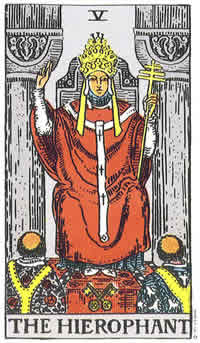
The Hierophant is the fifth card of the Major Arcana, traditionally depicted as a spiritual teacher, priest, or sacred initiator. In older decks, he was simply “The Pope,” representing the ultimate religious authority. As tarot evolved beyond its medieval and Renaissance origins, the Hierophant became a more nuanced figure: one who bridges the divine and the human realms, guiding others through wisdom, ritual, and cultural knowledge.
In essence, the Hierophant represents:
- Established systems of belief
- Moral codes and values
- Structure, ritual, and order
- Ancestral or cultural traditions
- Mentorship, guidance, and learning
- Initiation into a deeper level of understanding
This card is less about personal intuition (that’s the High Priestess’s realm) and more about what humanity has collectively preserved—teachings passed down, frameworks that help us make sense of life, and principles that hold societies together.
🌟 Symbolism of the Hierophant
Even if you’ve glanced at the imagery only briefly, the symbols are unmistakably loaded. Every detail communicates something about how knowledge and meaning are transmitted in the world.
1. The Crown and Triple Cross
The Hierophant’s crown represents spiritual authority, but unlike the stern rule of an emperor or king, this authority presides over doctrine, philosophy, and shared values.
The triple cross often symbolizes the fusion of body, mind, and spirit—or the transmission of wisdom across different planes of existence.
2. The Raised Hand
One hand is raised in benediction, mirroring the gesture used in blessings or teachings. It conveys an energy of permission, initiation, or sacred transmission—the idea that you are stepping into a lineage or deeper understanding.
3. The Two Acolytes
At the Hierophant’s feet stand two initiates, symbolizing the process of learning from a guide. Their presence reminds you that growth often happens through teachers, mentors, and supportive communities.
4. The Keys
The crossed keys at the base of the card are among the most powerful symbols. They represent access to hidden wisdom—and the idea that understanding comes from both outer knowledge and inner interpretation.
5. Pillars
Similar to the High Priestess’s card, the pillars here represent duality, balance, and sacred space. While the High Priestess invites a journey inward, the Hierophant defines a pathway outward into the world’s structures.
✨ The Hierophant Upright: Themes and Interpretations
When upright, the Hierophant is a stabilizing presence—calling you to reflect on the systems, values, and traditions that shape your life. Upright, it often signifies:
1. Tradition and Structure
This card points toward established patterns or systems that offer guidance: education, religion, cultural wisdom, professional institutions, or longstanding family practices. In practical life, this might signify returning to basics, learning foundational skills, or leaning on tried-and-true methods.
2. Mentorship and Guidance
One of the most supportive aspects of the Hierophant is its indication that a teacher, guide, or mentor is present—or you are stepping into that role for others. It highlights the importance of learning from those who have walked the path before you.
3. Moral and Ethical Alignment
The upright Hierophant asks: Are your actions aligned with your values?
It calls for integrity, ethical choices, and doing what is right even when no one is watching.
4. Community and Belonging
This card often signifies joining a group, community, or collective. It can appear when you’re signing up for a class, becoming part of an organization, or reconnecting with your spiritual roots.
5. Spiritual Practice and Ritual
Rather than spontaneous mysticism, the Hierophant embraces ritual: meditation routines, sacred ceremonies, weekly check-ins with yourself, or consistent spiritual study. It encourages building a container for spiritual growth.
6. Formal Education or Certification
In modern readings, the Hierophant frequently shows up when someone is pursuing formal training, licensing, or professional education. It’s a reminder that structure can be empowering.
🌪 The Hierophant Reversed: Breaking Free and Questioning Systems
When reversed, the Hierophant takes on a more rebellious tone. Where the upright card leans into tradition, the reversed Hierophant challenges it.
1. Questioning Authority
This is the moment of asking: Does this rule actually serve me?
The reversed Hierophant represents a refusal to follow norms blindly. It encourages critical thinking, personal sovereignty, and evaluating traditions before accepting them.
2. Breaking Out of Old Patterns
This card can indicate that outdated beliefs, inherited expectations, or cultural pressures are limiting your growth. Reversed, it signals a need to break free and define your own path.
3. Inner Wisdom Over External Approval
Rather than seeking guidance externally, the reversed Hierophant pushes you to trust your internal authority. This is the moment where self-trust becomes essential.
4. Unconventional Paths
It can show up when someone chooses a nontraditional lifestyle, career, or relationship model—or when they adopt alternative spiritual or philosophical practices.
5. Disruption and Reform
The reversed Hierophant can symbolize activism, reform, or restructuring. It supports dismantling systems that no longer serve the collective good.
❤️ The Hierophant in Love and Relationships
Upright
In romance, the Hierophant upright is one of the classic cards of commitment. It indicates shared values, stable foundations, and the possibility of long-term partnership. It can also represent marriage, traditional relationship roles, or building a life with strong moral alignment.
For someone single, it suggests meeting a partner through social groups, shared belief systems, community involvement, or formal institutions.
Reversed
Reversed, the card points to unconventional or non-traditional relationships. It may signal resisting societal expectations about what love “should” look like. For some, it reflects a desire for freedom or exploration. In an established relationship, it can indicate misaligned values or a need to redefine roles and expectations.
💼 The Hierophant in Career and Finances
Upright
In career readings, the Hierophant often signifies:
- Working within institutions
- Clear hierarchies or formal structures
- Training, certification, or mentorship
- A job where ethics and integrity play major roles
It’s positive for educators, counselors, administrators, and anyone working in government, law, religion, or large organizations.
Financially, it suggests stable, traditional strategies—budgeting, saving, reliable investments, or advice from a trusted professional.
Reversed
Reversed, this card encourages stepping away from rigid systems and finding alternative ways to work. It may point to entrepreneurship, creative freedom, or questioning the status quo at your workplace.
Financially, it cautions against risky shortcuts but highlights the need to develop your own approach rather than blindly following conventional wisdom.
🧘 The Hierophant in Spirituality
Upright
The Hierophant is one of the most spiritually grounded cards—rooted in lineage, tradition, and sacred rituals. Upright, it encourages:
- Joining or reconnecting with a spiritual community
- Establishing rituals and disciplined practices
- Learning from experienced spiritual teachers
- Exploring philosophy, ethics, or theology
This is a card of structure—offering the reminder that spiritual growth thrives within intentional routines.
Reversed
Reversed, the spiritual message shifts dramatically. It’s the card of seekers, mystics, and independent paths. It encourages you to:
- Trust your intuitive guidance
- Break free from limiting dogma
- Explore personal practices that resonate
- Question teachings that no longer feel aligned
It invites you to step into your own authority as a spiritual being.
🌒 The Shadow of the Hierophant
Every tarot card carries a shadow side. The Hierophant’s shadow represents:
- Blind obedience
- Dogmatic thinking
- Rigid institutions
- Pressure to conform
- The weight of generational expectations
- Systems that suppress individuality
When this card appears as a challenge, it asks whether external pressures are overriding your inner truth—or whether you’re enforcing those pressures on yourself or others.
🔮 The Growth Invitation of the Hierophant
Whether upright or reversed, the Hierophant ultimately asks:
What wisdom do you choose to anchor your life in?
And how can you honor both tradition and personal authenticity?
This is the dance between structure and freedom, legacy and innovation. The Hierophant guides you toward finding the right balance between the teachings you inherit and the truths you discover for yourself.
📊 Quick Reference Table
Below is a concise table summarizing the main meanings of the Hierophant in both upright and reversed positions.
| Aspect | Upright Meaning | Reversed Meaning |
|---|---|---|
| Core Theme | Tradition, structure, spiritual authority | Rebellion, questioning rules, individuality |
| Love | Commitment, shared values, marriage | Nontraditional relationships, misaligned values |
| Career | Institutions, mentorship, formal systems | Breaking from hierarchy, entrepreneurial paths |
| Spirituality | Ritual, community, learning from teachers | Personal spirituality, rejecting dogma |
| Shadow | Conformity, rigid beliefs | Rejection of guidance, ignoring wisdom |
| Advice | Seek guidance, honor tradition | Forge your own path, trust inner wisdom |
🔍Synopsis
The Hierophant tarot card represents the intersection of tradition, wisdom, and spiritual guidance, offering insights into how established systems shape our lives. Upright, it highlights mentorship, ethical alignment, community, and structured growth, while reversed, it challenges conformity and encourages independent thinking, personal authority, and unconventional paths. This card appears across love, career, and spiritual contexts, reminding us to balance inherited wisdom with our unique inner truth, and inviting reflection on when to honor tradition versus when to forge our own way.