Tarot Post Series
The Hermit is one of the most introspective and spiritually resonant cards in the Tarot deck. As Major Arcana card number IX, it represents a journey inward—a search for wisdom, self-understanding, and enlightenment. Unlike the flamboyant energy of cards like The Sun or The Magician, The Hermit brings quiet, reflective energy. Its lessons are subtle but profound, encouraging us to pause, step back, and seek the answers that lie within ourselves.
Whether upright or reversed, The Hermit asks us to consider solitude not as isolation, but as a sacred opportunity for reflection and growth. Let’s explore the symbolism, meanings, and applications of this powerful card in depth.
Symbolism of The Hermit 🔮
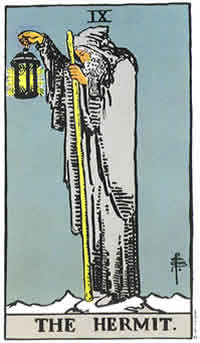
The imagery of The Hermit card is deeply symbolic. Traditionally, the card depicts an elderly figure standing atop a mountain, holding a staff in one hand and a glowing lantern in the other. Every element conveys layers of meaning:
- The Lantern: Symbolizes guidance, wisdom, and the illumination that comes from within. It represents the light we carry in the darkness—knowledge that cannot be found externally.
- The Staff: A symbol of support, strength, and stability on one’s journey. It reminds us that the path of self-discovery requires patience and perseverance.
- The Mountain: Represents challenges, personal growth, and the high vantage point that comes from introspection. Reaching the summit is metaphorical for achieving clarity and perspective.
- The Cloak: Denotes discretion, humility, and protection. The Hermit’s journey is deeply personal, often hidden from the eyes of the world.
The muted colors in many decks, particularly the grays and browns, emphasize the card’s focus on introspection and detachment from worldly distractions. The Hermit is about slowing down, stepping away, and listening to the inner voice.
Upright Meaning of The Hermit 🌟
When The Hermit appears upright in a reading, it signals a period of introspection, guidance, and self-awareness. It is a call to retreat, evaluate your life, and find clarity away from the noise of everyday existence. Key upright interpretations include:
- Self-Reflection: The Hermit encourages taking a step back to examine your thoughts, feelings, and motivations. Journaling, meditation, or quiet walks can help uncover insights.
- Spiritual Guidance: This card often suggests seeking wisdom from a mentor, teacher, or spiritual guide—or becoming that source of guidance for others.
- Solitude and Contemplation: Alone time is not lonely time; it is restorative. The Hermit reminds you that retreating can strengthen your understanding of yourself and your purpose.
- Inner Wisdom: Trusting your intuition is a key theme. The answers you seek externally often lie within.
- Patience and Caution: The Hermit advises caution before making major decisions. Careful contemplation ensures choices are grounded in clarity and truth.
In life areas like career, relationships, or personal development, The Hermit suggests a pause or a thoughtful evaluation. It asks you to consider: Am I moving through life reactively, or am I making deliberate choices aligned with my higher self?
Reversed Meaning of The Hermit 🌑
While the upright Hermit promotes reflection and clarity, the reversed Hermit warns against potential pitfalls of isolation, avoidance, or rigidity. Key reversed interpretations include:
- Isolation or Loneliness: Too much withdrawal can become unhealthy, leading to disconnection or stagnation.
- Refusal to Seek Guidance: The reversed Hermit can indicate stubbornness or reluctance to learn from others. Pride may prevent growth.
- Confusion or Lack of Insight: A failure to look inward may cause poor decisions or missed opportunities.
- Resistance to Self-Discovery: Sometimes, the inner work seems overwhelming, and avoidance becomes a coping mechanism.
- Over-Cautiousness: Fear of stepping forward may paralyze progress; the reversed Hermit may be urging action alongside reflection.
The reversal is a reminder that reflection should be balanced with engagement. Spiritual growth comes not just from retreating but also from integrating insights into daily life.
The Hermit in Love and Relationships ❤️💫
In romantic contexts, The Hermit offers nuanced guidance:
- Upright: The Hermit can indicate a period of introspection in your love life, perhaps a need for personal growth before deepening connections. It may also suggest seeking a partner who values wisdom, depth, and understanding.
- Reversed: Avoiding emotional intimacy, withdrawing from a partner, or failing to communicate openly can be highlighted. The reversed Hermit may signal emotional isolation or resistance to vulnerability.
In friendships or family dynamics, this card reminds us that sometimes we must step back to see situations more clearly, but it also warns against cutting ourselves off from those who support us.
The Hermit in Career and Finance 💼💡
In work or financial matters, The Hermit’s presence emphasizes reflection and strategic planning:
- Upright: Take the time to evaluate your career trajectory, consider long-term goals, or pursue further education or mentorship. This is a period for calculated moves rather than impulsive action.
- Reversed: Avoidance of responsibility, procrastination, or a refusal to seek guidance from experienced colleagues may lead to setbacks. The reversed Hermit signals the need to balance reflection with practical engagement.
The Hermit encourages thinking deeply about personal values, aligning career choices with inner purpose, and using wisdom to guide financial decisions.
The Hermit in Spirituality and Personal Growth ✨🕊️
Spiritually, The Hermit is a guide to profound inner exploration. Its lessons include:
- Meditation and Mindfulness: Creating space for meditation or mindful practices allows for deeper connection with intuition and inner guidance.
- Self-Discovery: Reflecting on your beliefs, values, and purpose brings clarity and confidence.
- Mentorship: Either seeking guidance from a teacher or serving as one can deepen spiritual understanding.
- Inner Light: The Hermit reminds us that true guidance comes from within; external validation is secondary.
The Hermit encourages us to slow down, honor solitude, and integrate wisdom into our daily lives. Spiritual growth often requires patience, self-compassion, and the courage to face uncomfortable truths.
Meditation and Practical Exercises with The Hermit 🧘♂️🔹
To connect with The Hermit energy, try these practices:
- Silent Reflection: Dedicate 15–30 minutes daily for introspection. Ask yourself key questions: What am I avoiding? What lessons am I missing?
- Journaling: Write down thoughts, feelings, and insights. Track patterns and revelations over time.
- Nature Walks: Walking in solitude allows your mind to quiet, facilitating clarity and inspiration.
- Mentorship: Seek a wise guide or teacher, or become one yourself—sharing knowledge can be a path to self-discovery.
- Meditative Lantern Visualization: Visualize holding a lantern, guiding your way through dark moments. Reflect on the light you carry internally.
These exercises strengthen the connection with your inner guidance and help integrate The Hermit’s wisdom into everyday life.
Astrology and The Hermit 🪐🌌
In many Tarot interpretations, The Hermit is associated with Virgo, the earth sign known for introspection, analytical thinking, and conscientiousness. Virgo energy emphasizes discernment, self-awareness, and the desire to be of service, aligning beautifully with The Hermit’s themes of inner guidance and personal growth.
Key Themes of The Hermit 🔑
- Solitude
- Inner wisdom
- Reflection and contemplation
- Guidance and mentorship
- Patience and careful decision-making
- Spiritual insight
Quick Reference Table 📊
| Aspect | Upright Meaning | Reversed Meaning |
|---|---|---|
| Self-reflection | Deep introspection, journaling, meditation | Avoidance of inner work, confusion |
| Solitude | Necessary for growth, personal space | Loneliness, excessive isolation |
| Guidance | Seeking or providing mentorship | Refusal to learn, stubbornness |
| Spirituality | Inner wisdom, enlightenment, intuition | Disconnection from inner guidance |
| Patience and caution | Thoughtful decision-making, careful action | Hesitation, over-cautiousness, missed chances |